Why Choose Between a Vertical Lift and Inclined Conveyor?

Time:2026-11-11 Author:Charlotte
0%

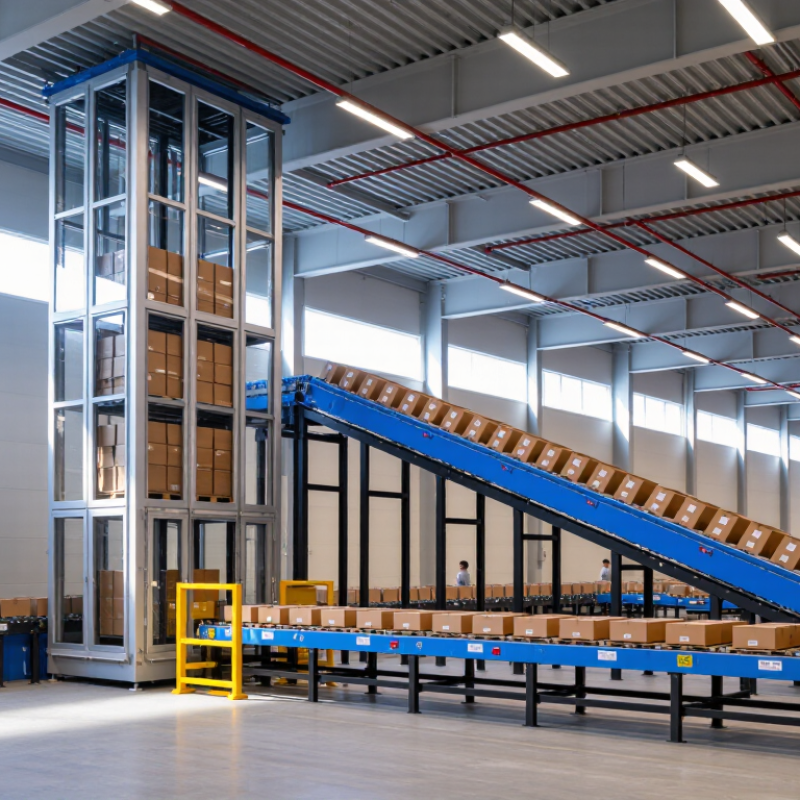
A vertical lift and an inclined conveyor can both move products between floor levels, but they solve different layout problems. A lift carries goods upward in a compact footprint. An inclined conveyor moves them continuously along a sloped path. That difference affects more than floor space. It can change loading methods, product flow, access for maintenance, and how easily operators clear a jam.

The practical question is how to choose between a vertical lift and an inclined conveyor for your actual operation. Start with the product: its dimensions, weight, shape, and sensitivity to tipping or sliding. Then look at throughput, available headroom, floor space, transfer points, and how often equipment must stop. A tote moving between two fixed levels may suit a lift. A steady stream of cartons may work better on an incline, if the slope and belt provide enough control. Small details matter. A short transfer gap can still disrupt flow.

There is no universal winner. A lift may save space but introduce stop-and-go movement; an incline may support continuous flow but occupy a longer route. Compare the full system, including guarding, controls, cleaning, and service access, with a qualified equipment provider. Site measurements and real product trials are more useful than a brochure alone. And be candid about uncertainty: forecasts change, and one awkward package can expose a weak assumption. The better choice is the one that fits the operating conditions, not just the drawing.
Why Choose Between a Vertical Lift and Inclined Conveyor?

What Are Vertical Lifts and Inclined Conveyors?

A vertical lift moves goods between elevations on a guided platform or enclosed carriage. It may carry a tote, carton, or pallet from a loading point to a fixed discharge level. The platform usually pauses for loading and unloading, so movement happens in defined cycles. Think elevator, not moving walkway. Gates, sensors, and interlocks help control transfers, while the lift’s capacity and platform size must match the load.

An inclined conveyor carries products continuously up or down a sloped belt, roller bed, or chain. Cleats or side rails can help steady cartons as the angle increases. It suits a steady flow between nearby floors or mezzanine levels. Unlike a lift, it occupies space along the slope and needs suitable entry and exit points. The slope matters. Loose items may slide, and tall cartons can tip.

The practical difference is that a lift uses a compact vertical footprint but often transfers loads in batches; a conveyor trades floor length for continuous movement. Check product dimensions, weight, hourly rate, and operator access at each level. Measure the real route, including turns and guards. A tidy drawing can still hide a poor handoff, where cartons queue or arrive at an awkward height. Test with representative loads before fixing the layout.

How Does Each Conveyor System Move Materials?

Why Choose Between a Vertical Lift and Inclined Conveyor?

How Does Each Conveyor System Move Materials?

A vertical lift raises or lowers goods between fixed levels using a platform, carrier, or moving set of supports. A box may enter at floor level, pause on the lift, then exit onto an upper conveyor. Some systems move loads in batches; others handle a steady stream. The exact motion depends on the lift design and how it connects to the surrounding line. That detail matters.

An inclined conveyor carries materials along a sloped path, usually on a belt or rollers. Its motor moves loads continuously uphill or downhill, so cartons can travel between elevations without a separate lifting cycle. A textured belt can help steady boxes on an incline, but loose or unstable items may shift. Short inclines can also need careful transfer points to prevent jolts.

The difference is not simply vertical versus sloped. A lift can suit a compact layout with distinct floor stops, while an incline needs enough horizontal space for its slope. Load dimensions, weight, speed, and spacing affect both choices. A comparison on paper can miss a real snag: the shape of the product at handoff. Test representative loads where possible, because even a small change in packaging can alter how smoothly materials move.

How Do Their Capacity, Footprint, and Costs Compare?

Capacity should be compared in loads per hour, not by machine type alone. A vertical lift moves trays or pallets between levels in controlled batches; its practical rate depends on cycle time, load spacing, and door dwell. An inclined conveyor can maintain continuous flow, but its rate depends on belt speed, product stability, and the incline. CEMA’s Belt Conveyors for Bulk Materials explains how belt width, speed, and material properties shape capacity. Peak flow matters. Measure the busiest hour, not the daily average.

A lift often uses less floor area, but needs overhead clearance, safe access, and room for loading zones. An incline occupies a longer route, especially when floor levels are far apart, and may need intermediate transfers. Installation cost follows the building: structural changes, guarding, controls, and maintenance can outweigh the equipment price. Space has a price. MHI’s 2024 Annual Industry Report found that 55% of respondents planned to increase technology and innovation investment, while 88% expected robotics and automation adoption by 2028. Those figures describe broad investment intent, not a guaranteed return for either conveyor. The comparison is imperfect; site surveys and measured peak demand matter more than a generic payback estimate.

Which Industries and Applications Suit Each System?

A vertical lift suits facilities that move goods between fixed floor levels. Warehouses often use one to transfer palletized cartons from ground storage to mezzanines. Manufacturing plants may use lifts to feed equipment on elevated lines. The compact footprint helps where floor space is limited, but the lift needs clear access at each landing. It also suits loads that should travel in a controlled, enclosed path.

An inclined conveyor works well when products need a steady route between elevations. Food facilities may use belt conveyors to carry packaged items toward inspection or packing stations. Bulk-material operations often use cleated belts to reduce rollback on steeper slopes. The route can be longer and more continuous than a lift’s, though it takes more floor space. Small cartons may shift on a slope; test the actual product, not just an empty belt.

Tips: Check load size, weight, throughput, incline, and available headroom. Include transfer points and cleaning access in the layout. A site measurement can prevent costly surprises.

There is no universal winner. A lift may bottleneck a fast line if its cycle time is too slow. An inclined conveyor may create awkward bends or require extra guarding. Compare real peak demand, not average output, and confirm how operators will clear jams. Sometimes the simpler layout is not the one that looks best on a drawing.

How Should You Choose Between the Two?

Choosing between a vertical lift and an inclined conveyor starts with the route, not the machine. A lift moves loads between fixed levels while using little floor space. An inclined conveyor creates a continuous path but needs more room and stable loads. Measure elevation, peak hourly rate, load dimensions, and landing space. A small carton and a tall, flexible tote may behave very differently on a slope. Peak rate matters.

The 2024 MHI Annual Industry Report found that 55% of surveyed supply-chain professionals planned to increase investment in supply-chain innovation. This signals growing interest in automation, not proof that either option is better. For intermittent batches, a lift may avoid unnecessary conveyor length. For steady, frequent flow, an incline can reduce stop-start transfers. Compare peak throughput, noise, maintenance access, and jam-clearing procedures. Then test the layout with real loads; drawings can miss awkward handoffs.

Tips: Sketch every transfer point and measure the available footprint. Test the heaviest, least stable load. Confirm lift cycle time or conveyor speed under realistic spacing. Leave room for service access. Space is unforgiving.

Why Choose Between a Vertical Lift and an Inclined Conveyor?

For a 10-meter elevation gain, a vertical lift has a 10-meter vertical travel path. An inclined conveyor requires a longer path: approximately 38.6 meters at 15°, 29.2 meters at 20°, or 20 meters at 30°. These values are calculated using travel distance = elevation gain ÷ sin(angle). Actual system suitability depends on the material, layout, and equipment design.

FAQS

How should capacity be compared between a vertical lift and an inclined conveyor?

Compare peak loads per hour, not machine type alone. Lift capacity depends on cycle time, spacing, and door dwell. Conveyor capacity depends on belt speed, product stability, and incline. Measure the busiest hour.

Which system usually takes up less floor space?

A vertical lift often uses less floor area, but needs overhead clearance and loading zones. An inclined conveyor needs a longer route, especially between distant levels. Space is unforgiving.

Which option works better for intermittent batches?

A lift can suit intermittent batches moving between fixed levels. It may avoid unnecessary conveyor length. Still, a slow cycle can bottleneck a fast line.

When is an inclined conveyor a better fit?

It can suit steady, frequent flow between elevations. Cleated belts may help reduce rollback on steeper slopes. Test real products; small cartons can shift.

What applications suit a vertical lift?

Warehouses may use lifts to move palletized cartons to mezzanines. Manufacturing plants may feed elevated equipment. Each landing needs clear access.

What should be checked before choosing either system?

Measure elevation, peak hourly rate, load dimensions, and available headroom. Include transfer points, cleaning access, and service space. Drawings miss awkward handoffs.

How do installation costs compare?

Building changes, guarding, controls, and maintenance can outweigh equipment price. A site survey is more useful than a generic payback estimate. The comparison is imperfect.

What practical tests can prevent problems?

Test the heaviest, least stable load. Check lift cycle time or conveyor speed with realistic spacing. Confirm how operators will clear jams. Real loads matter.

Conclusion

Vertical lifts and inclined conveyors both move materials between levels, but they do so in different ways. A vertical lift raises or lowers goods directly, making it useful where floor space is limited and a compact, controlled transfer is needed. An inclined conveyor moves items along a sloped path, offering a continuous flow that can suit operations with more room for a gradual change in elevation.

Their capacity, footprint, and costs depend on the load, travel distance, throughput, installation requirements, and maintenance needs. Vertical lifts may save space but involve dedicated lifting equipment, while inclined conveyors require room for their slope and supporting structure. Each can serve a range of industries and applications, from moving packaged goods between floors to feeding materials through a production line. To decide how to choose between a vertical lift and an inclined conveyor, compare the required flow, available space, material characteristics, safety needs, and total operating costs.

Charlotte

Charlotte

Charlotte is a seasoned marketing professional with a deep understanding of the company's portfolio and a passion for elevating its presence in the market. With a keen eye for detail and a commitment to excellence, she ensures that our professional blog is regularly updated with insightful articles......