Why Does a Cargo Lift Need a Safety Gear System?

Time:2026-11-04 Author:Aria
0%

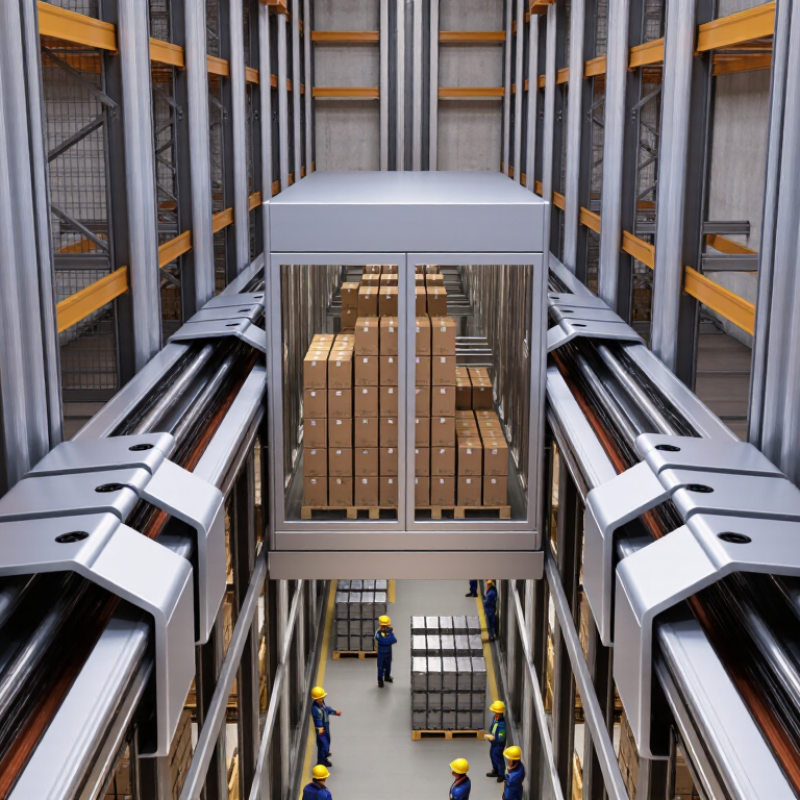
A cargo lift carries more than goods. It carries concentrated weight above workers, service teams, and nearby equipment. If its suspension fails or the car accelerates beyond its safe limit, a safety gear system can help stop the car by gripping its guide rails. That action is physical and direct. Metal wedges engage the rails; the car slows instead of continuing downward. The exact design depends on the lift type, rated load, speed, and manufacturer’s instructions.

The U.S. Bureau of Labor Statistics recorded 5,283 fatal work injuries across all industries in 2023. That figure is not specific to cargo lifts, but it underscores why workplace hazards deserve careful controls. ASME A17.1/CSA B44 sets safety requirements for elevators and related equipment; owners should confirm which standards and local requirements apply to their installation. A safety gear system is not a substitute for inspections, maintenance, or sound loading practices. It is one layer in a larger safety plan. Small details matter: a worn guide rail, an overloaded platform, or a delayed inspection can change how a system performs.

So, why does a cargo lift need a safety gear system? Because brakes and routine controls may not address every runaway or overspeed condition. A named expert quotation is not included here: without a verifiable published source, attributing exact words to an individual would be unreliable. That limitation matters. Safety claims should be checked against the lift’s documentation and qualified inspection records.
Why Does a Cargo Lift Need a Safety Gear System?

What a Cargo-Lift Safety Gear System Does in the Lift Assembly

Why Does a Cargo Lift Need a Safety Gear System?

A cargo-lift safety gear is a mechanical backup within the lift assembly. On many designs, it grips the guide rails if the car moves downward too quickly. A speed-monitoring device detects the condition and triggers the gear. The exact arrangement varies by lift type. It is not a replacement for the normal brake or routine maintenance.

The gear must work with the car frame, guide rails, mounting brackets, and triggering linkage. Correct alignment matters: a small mismatch can affect how evenly the gear engages. During assembly, technicians check clearances and confirm that the moving parts can respond without obstruction. They also verify the installation against the lift maker’s specifications. A sound design can still be let down by a detail that is hard to inspect later. That deserves attention.

Tips: Keep the gear and its linkage accessible for inspection. Look for loose fittings, corrosion, or rail damage, and have a qualified technician test the system. Never adjust or test safety gear by improvising a load or trigger. A clear inspection record helps reveal wear that a quick visual check may miss.

Why Does a Cargo Lift Need a Safety Gear System?

A safety gear system helps stop and hold a lift car if it travels downward too fast. An overspeed governor detects excessive speed and activates the safety gear, which grips the guide rails.

The chart shows an illustrative example: a rated speed of 0.5 m/s and a trip speed of 0.7 m/s. Actual trip settings depend on the lift design and applicable safety requirements.

How Safety Gear Limits Uncontrolled Carriage Descent

Why Does a Cargo Lift Need a Safety Gear System?

How Safety Gear Limits Uncontrolled Carriage Descent

If a suspension component fails or the carriage overspeeds, gravity keeps pulling. A safety gear system provides a mechanical backup. In designs with rail-gripping gear, an overspeed governor or another trigger presses wedges against the guide rails. The carriage slows, then stops. The trigger and stopping distance depend on the lift’s design, load, and condition. Safety gear does not replace routine inspection.

The U.S. Consumer Product Safety Commission has cited estimates of about 17,000 elevator- and escalator-related injuries and 30 deaths annually. These figures combine equipment types; they are not cargo-lift statistics. Still, they show why controlled stopping matters. A loaded platform can shift boxes, crush toes, or trap a worker during uncontrolled descent. Safety gear helps limit this hazard, but damaged rails or poor adjustment can undermine it. That detail is easy to overlook.

Tips: Follow the lift’s inspection and testing instructions. Keep guide rails clean, record test results, and investigate unusual scraping or sudden stops. A successful test is useful, but it does not prove every component is sound.

How the Overspeed Governor Triggers Safety Gear Engagement

A cargo lift’s safety gear is the mechanical backup that grips the guide rails if the car moves too fast downward. The overspeed governor watches the car’s speed through a rope loop connected to it. At normal speed, the loop travels freely. If speed rises past the governor’s set point, a flyweight mechanism trips and locks the governor sheave. The stopped rope then pulls a linkage on the car, engaging the safety gear.

EN 81-20:2020 specifies governor trip-speed requirements; for many conventional lift cases, the minimum is 115% of rated speed. Exact limits depend on the lift’s speed and safety-gear type. For example, a 1.0 m/s rated speed may mean a trip point no lower than 1.15 m/s. That figure is a threshold, not a guarantee of gentle stopping. Rail condition, adjustment, and testing matter too. A small misalignment can change how the gear engages.

Tips: Keep the governor rope, sheave, linkage, and guide rails clean and correctly adjusted. During inspection, verify the trip action using the lift maker’s approved procedure. Don’t assume a quiet lift is a properly tested lift.

What EN 81-20’s 115% Minimum Trip-Speed Rule Means

EN 81-20’s 115% figure is a minimum overspeed-governor trip threshold, not a normal operating speed. For a lift rated at 0.5 m/s, the governor must not trip below 0.575 m/s. The governor detects excessive speed; the safety gear then grips the guide rails to arrest the car. That gap matters. It helps prevent nuisance trips during ordinary travel while preserving a defined response if speed rises dangerously.

The setting is not a single universal number. EN 81-20 also specifies an upper trip-speed limit, which varies with rated speed and safety-gear design. Technicians therefore need to check the governor’s calibrated setting against the lift’s rated speed, then verify operation during commissioning and inspection. A dusty rail, worn linkage, or poorly recorded adjustment can undermine a calculation that looks correct on paper.

The National Elevator Industry, Inc. cites about 18 billion elevator passenger trips annually in the United States, illustrating how often lift systems operate. That industry-wide figure is not cargo-lift-specific, but it underlines the value of repeatable checks. A useful question for maintenance records is simple: do they show the measured trip speed, not just a tick beside “tested”? The distinction is easy to miss.

Why Does a Cargo Lift Need a Safety Gear System? - What EN 81-20’s 115% Minimum Trip-Speed Rule Means

A safety gear system is intended to help stop and hold a lift car on its guide rails when triggered. Under EN 81-20, the overspeed governor’s activation speed for car safety gear must not be less than 115% of the lift’s rated speed. The examples below show that minimum calculation.

Rated lift speed Calculation Minimum governor trip speed What the figure means
0.25 m/s 0.25 × 1.15 0.2875 m/s The governor’s activation speed must not be below this calculated minimum.
0.50 m/s 0.50 × 1.15 0.575 m/s The minimum is 15% above rated speed; it is not the lift’s normal operating speed.
0.63 m/s 0.63 × 1.15 0.7245 m/s The value is a calculated minimum trip threshold, subject to the applicable standard requirements.
1.00 m/s 1.00 × 1.15 1.15 m/s The governor must not activate below 115% of rated speed under this minimum-speed rule.

Important: These are arithmetic examples, not universal settings or a complete compliance check. The 115% figure concerns the governor’s activation speed; it does not state the car’s stopping distance or guarantee that every cargo lift is governed by EN 81-20. Applicability and permitted settings depend on the lift type, safety-gear arrangement, the adopted edition of the standard, and local regulations. Verify the complete requirements with a qualified lift professional.

How ASME A17.1/CSA B44 Guides Safety-Gear Inspection and Testing

Why Does a Cargo Lift Need a Safety Gear System?

A safety gear helps stop a car if its suspension or speed-control system fails. But the gear itself needs inspection and testing to remain dependable. ASME A17.1/CSA B44 provides code requirements for elevators, including safety-related checks. The applicable edition and local rules matter. Not every cargo lift is classified the same way, so confirm the equipment’s category before planning tests.

Inspection should look beyond whether the mechanism appears intact. A qualified technician may check the operating linkage, moving parts, fasteners, corrosion, and the surfaces that engage the guide rails. Small clues matter. Testing must follow the governing code, equipment instructions, and approved procedures, with people and loads kept clear of hazards. The required test type and interval depend on the installation and applicable requirements; a quick stop is not proof of compliance. Record what was tested, the conditions, results, and any corrective work. Paperwork can look complete while a field note remains vague. That gap deserves attention, because unclear records make future comparisons harder. A careful review can reveal wear or changes before they become a larger problem.

FAQS

What does the 115% minimum trip-speed rule mean?

It sets a minimum threshold for an overspeed governor, not the lift’s normal travel speed. The governor must not trip below that threshold.

What trip speed applies to a lift rated at 0.5 m/s?

The minimum is 0.575 m/s. The governor detects excessive speed, and the safety gear grips the guide rails.

Is 115% the only trip-speed limit?

No. There is also an upper limit, which depends on rated speed and safety-gear design. Check the lift’s actual settings.

What should technicians verify during commissioning or inspection?

They should compare the calibrated trip speed with the lift’s rated speed and verify operation using approved procedures. Record the measured result.

What details belong in maintenance records?

Include the measured trip speed, test conditions, results, and corrective work. “Tested” alone says too little.

What should a safety-gear inspection examine?

A qualified technician may check linkages, moving parts, fasteners, corrosion, and rail-contact surfaces. Small signs of wear matter.

Does a quick stop prove that a safety gear complies?

No. The test type and interval depend on the installation and applicable requirements. A quick stop is not proof.

Why can a correct-looking calculation still be unreliable?

Dusty rails, worn linkages, or poorly recorded adjustments can affect confidence in the setup. Paper can look tidy. The field may tell another story.

Conclusion

A cargo lift carries heavy loads between levels, so its safety gear system provides a mechanical safeguard if the carriage begins to descend uncontrollably. The gear is part of the lift assembly and is designed to grip the guide rails when activated, slowing or stopping the carriage and helping protect people, goods, and equipment. This is why does a cargo lift need a safety gear system: normal brakes and controls may not be enough to manage every failure or loss of control.

An overspeed governor monitors carriage movement and triggers the safety gear if the lift exceeds its set speed. Under EN 81-20, the governor’s trip speed is subject to a minimum threshold of 115% of the lift’s rated speed, helping ensure the system responds to excessive movement rather than ordinary operation. ASME A17.1/CSA B44 provides guidance for inspection and testing, including checking that safety components are in working order and that the gear can engage as intended. Regular, qualified inspections help confirm the system remains ready to perform its protective function.

Aria

Aria

Aria is a dedicated marketing professional with a deep passion for innovative strategies and a keen understanding of our company's product offerings. With a wealth of experience in the industry, Aria excels at crafting engaging content that highlights the unique features and benefits of our......