Top 10 Ways to Upgrade Manual Lift Tables to Electric

Time:2026-10-16 Author:Ethan
0%

Manual lift tables remain useful in warehouses, workshops, and production cells. They are simple, durable, and often inexpensive to maintain. Yet repeated pumping can slow work and increase physical strain during busy shifts.

The U.S. Bureau of Labor Statistics continues to identify transportation and material-moving work as a major source of workplace injuries. OSHA’s ergonomics guidance also highlights forceful exertion, repetitive motion, and awkward postures as important risk factors. These findings make powered lifting worth serious consideration, especially where operators raise heavy loads many times each hour. However, an electric actuator alone does not create a safe system. Poor controls, unstable loads, weak guarding, or inadequate charging procedures can introduce new hazards.

MHI’s 2024 Annual Industry Report describes labor availability and automation investment as continuing priorities for material-handling companies. The International Federation of Robotics reported more than 541,000 industrial robots installed worldwide in 2023, showing the broader movement toward assisted and automated operations. Lift tables are not robots, but they belong to the same practical shift: reducing unnecessary effort while preserving operator control.

This guide explains how to upgrade manual lift tables to electric through ten practical improvements. It covers actuator selection, battery or mains power, control switches, limit protection, load stability, and preventive maintenance. Details matter here. A slow platform, warm motor, loose cable, or tilted pallet can reveal deeper design problems.

The cheapest upgrade may not be the best one. Sometimes replacement is wiser. Careful inspection should come first.
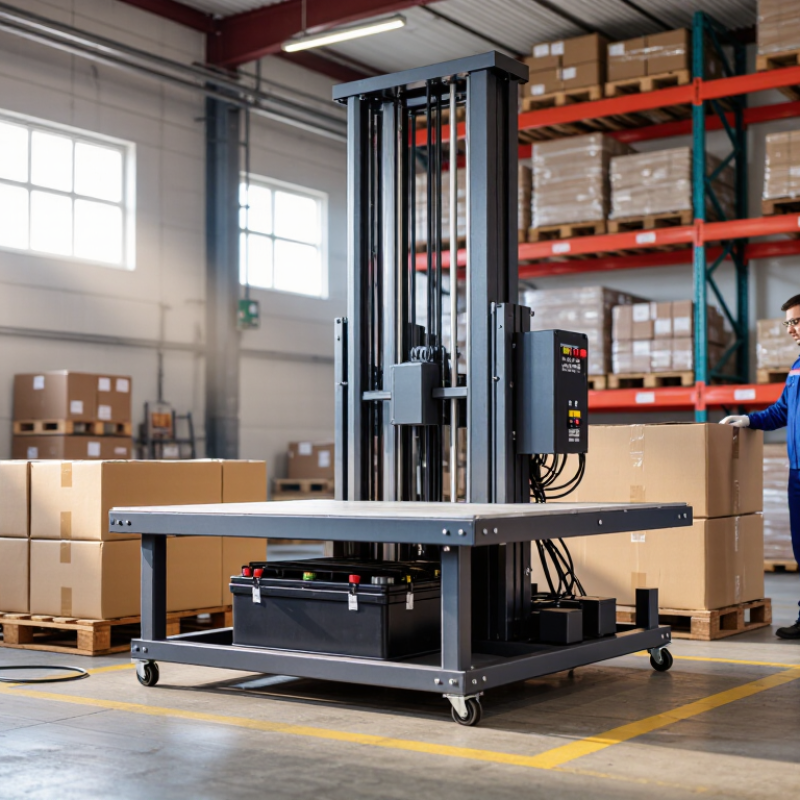
Top 10 Ways to Upgrade Manual Lift Tables to Electric

Assess the Current Manual Lift Table and Define Electric Upgrade Goals

Before selecting an electric actuator, assess how the manual lift table performs today. Record its rated load, platform size, lowest and highest positions, lifting cycles per shift, and average load weight. Inspect welds, rollers, casters, hinges, hydraulic components, and the floor around the workstation. A table that drifts, binds, or needs repeated foot pumping may indicate structural or maintenance problems, not merely a power shortage.

The U.S. Bureau of Labor Statistics reported 275,590 private-industry cases involving overexertion and bodily reaction in 2023. This figure supports a practical upgrade goal: reduce forceful manual handling without creating new pinch or stability hazards. Define the target clearly. For example, the table should lift 250 kilograms through 700 millimeters, complete one cycle in 12 seconds, and operate 80 cycles per shift. Include emergency stopping, guarded moving parts, controlled descent, and accessible controls.

Measure the real work.

During site trials, compare the proposed electric cycle with the current task, including loading, positioning, and unloading time. The MHI 2024 Industry Report identifies workforce and operational efficiency as continuing material-handling priorities, but automation alone does not guarantee productivity. A faster table may cause product impact, awkward reaching, or frequent battery charging. That gap matters. Review energy supply, duty cycle, maintenance access, noise, and operator feedback before approving the specification. A simple observation log, photographs, and three days of cycle data can expose assumptions that a clean spreadsheet misses.

Choose the Right Electric Drive and Power System

Top 10 Ways to Upgrade Manual Lift Tables to Electric

Choose the electric drive around the table’s real workload, not its maximum label. Measure rated load, travel distance, lifting speed, cycles per hour, and starting frequency. A geared motor suits repeated lifting with steady loads. A screw actuator can offer precise positioning, but it may require more maintenance under dusty conditions. Hydraulic conversion remains useful for very heavy loads, although it adds hoses, seals, and leak points.

Power demand deserves equal attention. The International Energy Agency reports that electric motor systems consume roughly 53% of global electricity. The U.S. Department of Energy’s Motor Systems Sourcebook places motor-driven equipment near 23% of U.S. electricity use. These figures make efficiency more than an energy-saving slogan. Select a motor with adequate thermal capacity, then match the controller to the duty cycle. A variable-speed drive can reduce harsh starts, but it cannot fix an undersized motor.

Battery operation needs a measured load profile. Calculate watt-hours per shift, include charger losses, and leave reserve capacity for cold floors and aging cells. Add mechanical brakes, upper and lower limit switches, overload protection, and an emergency stop. IEC 60204-1 and ISO 12100 provide useful design references. A practical warning: a neat calculation can still miss side loading from an uneven pallet. Test with real loads, inspect the frame after repeated cycles, and revise the design when field evidence disagrees.

Install Electric Lifting, Control, and Safety Components

Manual lift tables become electric only when lifting, control, and protection are upgraded together. A motor alone is not an upgrade. In field retrofits, technicians often replace the foot pump with an electric actuator or hydraulic power unit. The correct choice depends on rated load, stroke, duty cycle, platform travel, and load balance. Measure these conditions before ordering components.

The 2024 Liberty Mutual Workplace Safety Index estimated that overexertion cost U.S. employers about 12.7 billion dollars in 2022. Electric lifting can reduce repeated pumping, but poor controls may create new hazards.

Install upper and lower limit switches, overload protection, and a clearly marked emergency-stop circuit. Use a low-voltage pendant with guarded buttons. Add cable protection where moving parts can crush wiring. A mechanical maintenance prop or anti-drop valve can protect workers during service.

Keep hands clear.

Control logic should prevent unexpected starts after power returns. It should also stop the platform when a limit switch activates. Designers can review ISO 13849-1 for safety-related control functions and ANSI MH29.1 for industrial lift-table practices. These references do not replace a site risk assessment. A retrofit can look tidy while hiding weak mounting bolts or overheated wiring. I would test the table with an empty platform, a balanced load, and a deliberately uneven load. That last test is often skipped. It should not be. Record stopping distance, current draw, noise, and control response after each trial.

Improve Mobility, Ergonomics, and Load-Handling Performance

Manual lift tables can become electric workstations without replacing the entire material-handling process. A powered lift mechanism reduces repeated pumping, awkward bending, and sudden load movement. OSHA identifies forceful exertion, awkward postures, and repetitive tasks as major ergonomic risk factors. The improvement is visible: an operator raises a 300-kilogram pallet with a control switch instead of turning a handle beside it.

Mobility also matters. Adding powered wheels or assisted drive helps workers move loads across uneven floors and narrow aisles. The U.S. Bureau of Labor Statistics reported 946,290 nonfatal occupational injuries involving days away from work in 2023, including many sprains, strains, and tears. Not every case comes from lift-table use, but the figure shows why daily handling decisions deserve attention. Small gains accumulate.

Load handling must remain predictable. Electric upgrades should include guarded controls, emergency stopping, overload protection, stable platforms, and clearly marked capacity limits. ANSI/ITSDF B56.10 addresses safety requirements for manually propelled high-lift industrial trucks, offering useful guidance for risk reviews. Test the table with real pallets, not only empty platforms. That practical check often exposes slow lowering, poor wheel tracking, or controls placed too far away. Some upgrades may still create new risks, especially when speed is increased without improving visibility or training. That deserves honest review.

Test, Maintain, and Optimize the Upgraded Lift Table

Upgrading a manual lift table to electric power changes more than lifting speed. It changes risk, load behavior, and maintenance needs. In 2023, the U.S. Bureau of Labor Statistics recorded about 2.6 million nonfatal workplace injuries and illnesses in private industry. A controlled commissioning process matters.

Test the table at no load, half load, and rated load. Measure lifting time, platform drift, stopping distance, and noise. Check emergency stops, limit switches, guarding, and pinch points. Record motor temperature after repeated cycles. The first calibration may be wrong. That is useful evidence, not failure. If the platform jerks, inspect alignment, wiring, hydraulic pressure, and uneven loading before increasing speed. ISO 12100 risk-assessment principles support identifying hazards before normal production begins.

Tips: Mark the safe load zone clearly. Keep hands away from scissor arms. Inspect cables weekly. Retighten terminals during scheduled maintenance. Clean spilled oil immediately. Review the test log after every repair.

Maintenance should follow measured usage, not guesswork. OSHA machine-safety guidance emphasizes guarding moving parts and controlling unexpected motion during servicing. Use a documented lockout procedure before opening electrical panels or working beneath the platform. Compare current readings with baseline values. Rising current may indicate friction, overload, or motor damage. A practical maintenance report should include dates, readings, defects, corrective actions, and the technician’s name. BLS injury data shows why small defects deserve attention. A drifting platform is not “almost acceptable.” It needs investigation.

Top 10 Ways to Upgrade Manual Lift Tables to Electric - Test, Maintain, and Optimize the Upgraded Lift Table

# Upgrade Method Recommended Specification or Setting Acceptance Test Maintenance Focus Optimization Metric
1 Install a properly sized electric actuator or hydraulic power unit Select the motor, actuator, pump, and controls for the table’s rated load, stroke, duty cycle, and lifting speed. Do not exceed the original rated capacity. Run the table through its full travel with no load and with the rated load. Verify smooth motion, stable stopping, and no abnormal noise or overheating. Inspect mounting bolts, couplings, hoses, cables, and actuator seals for looseness, wear, leaks, or damage. Compare actual lifting time and motor current with the design values; investigate rising current or slower travel.
2 Add a guarded control station with emergency stop Use clearly labeled raise, lower, and stop controls. Position controls where the operator can see the load and keep clear of pinch points. Test every control function and confirm that the emergency stop removes motion energy and requires a deliberate reset before restarting. Check labels, switches, enclosure condition, cable glands, and emergency-stop operation during scheduled inspections. Track control-related stoppages and unauthorized bypasses; the target should be zero bypassed safety devices.
3 Install upper and lower travel limit switches Set limits before the mechanical end stops and protect switches from impact, contamination, and accidental adjustment. Operate the table slowly toward each limit and verify that motion stops consistently without forcing the mechanical structure. Inspect switch alignment, actuator arms, wiring, and mounting hardware; clean contamination that could prevent actuation. Record stop-position repeatability and investigate drift, inconsistent stopping, or contact damage.
4 Add overload protection and load monitoring Use a current limit, pressure relief valve, load cell, or equivalent protection suitable for the drive system. The protection must not be used to increase rated capacity. Verify that the protection limits or stops motion under a controlled overload test performed according to the equipment risk assessment. Check calibration status, pressure settings, sensor wiring, and signs of repeated overload events. Monitor overload trips per operating shift; frequent trips indicate poor load distribution, excessive friction, or an unsuitable process.
5 Improve platform stability and load positioning Add load stops, side guides, non-slip surfaces, or adjustable fixtures where needed. Keep the center of gravity within the manufacturer’s specified load area. Test lifting and lowering with representative loads placed at permitted positions. Confirm that the platform remains level and stable. Inspect welds, deck plates, guide rollers, hinges, stops, and fasteners for cracks, deformation, or excessive play. Measure platform tilt and load shift during operation; reduce variation through better fixturing and load centering.
6 Upgrade electrical protection and cable management Provide correctly rated disconnecting means, overcurrent protection, grounding, strain relief, and protected flexible cables for the operating environment. Verify grounding continuity, enclosure integrity, correct supply voltage, protective-device operation, and absence of exposed energized parts. Inspect cables for abrasion, crushing, sharp bends, heat damage, and loose terminals. Retighten connections only under a safe isolation procedure. Track electrical faults and unplanned trips; use recorded current and temperature trends to identify deterioration early.
7 Add a battery system for mobile operation Size the battery for the required lifting cycles, travel distance, ambient temperature, and charging time. Include a low-voltage cutoff and protected charging connection. Complete the planned operating cycle and confirm stable lifting speed, correct low-voltage warning, and safe charger operation. Inspect terminals, connectors, battery enclosure, charger leads, and electrolyte or battery condition where applicable. Measure cycles per charge and charging time; avoid deep discharge and recharge according to the battery manufacturer’s instructions.
8 Add position, height, or anti-collision sensing Use sensors appropriate to the environment and configure them to prevent unintended contact with racks, fixtures, people, or nearby equipment. Test detection with representative objects and confirm that the table stops or prevents motion as designed. Clean sensor faces, check alignment and mounting, and inspect connectors for moisture, dust, or impact damage. Record nuisance stops versus detected hazards; reduce false trips without compromising the protective function.
9 Introduce preventive-maintenance scheduling Create daily operator checks, monthly functional inspections, and periodic detailed inspections based on usage, environment, and risk. Use a checklist covering load capacity, guards, controls, emergency stop, leaks, unusual noise, structure, and safe stopping. Lubricate only specified points and materials; replace damaged or worn parts before they affect safe operation. Measure preventive-maintenance completion rate, repeat failures, and mean time between unplanned repairs.
10 Standardize testing, operator training, and performance review Document rated load, operating limits, isolation steps, inspection results, and approved operating procedures. Train operators before use. Complete a commissioning record, functional safety test, representative load test, and operator competency check. Keep inspection, repair, training, and test records; review incidents, near misses, and recurring defects. Review cycle time, energy use, availability, downtime, and safety observations monthly to guide further improvements.

Safety note: All modifications, tests, and inspections should be completed by competent personnel in accordance with the lift table manufacturer’s instructions, applicable local regulations, and the site risk assessment.

FAQS

How should I choose an electric drive for a manual lift table?

Base the choice on real workload, not the maximum label. Measure load, travel distance, speed, hourly cycles, and starting frequency.

When is a geared motor suitable?

A geared motor suits repeated lifting with steady loads. It works well when the table performs similar movements throughout each shift.

When should I consider a screw actuator or hydraulic system?

A screw actuator offers precise positioning but may need more maintenance in dusty areas. Hydraulic systems suit very heavy loads but add hoses, seals, and leak points.

How can I estimate battery capacity?

Calculate watt-hours per shift and include charger losses. Leave reserve capacity for cold floors, aging cells, and unexpected resistance.

What safety features should an electric lift table include?

Add mechanical brakes, upper and lower limit switches, overload protection, guarded controls, and an emergency stop. Mark capacity limits clearly.

Can powered movement improve workplace ergonomics?

Yes. It can reduce repeated pumping, awkward bending, and sudden load movement. An operator may raise a 300-kilogram pallet using a switch.

What should I check when adding powered wheels?

Check wheel tracking, floor conditions, aisle width, and stopping distance. Uneven floors can change handling behavior.

How should I test an upgraded lift table?

Test it loaded. Use real pallets, not only an empty platform. Inspect the frame after repeated cycles and review slow lowering or distant controls.

Can a variable-speed drive solve an undersized motor problem?

No. It can soften harsh starts, but it cannot correct insufficient motor capacity or poor thermal performance.

What design assumptions deserve another review?

A neat calculation may miss side loading from an uneven pallet. Field evidence matters more than a perfect spreadsheet.

Conclusion

Upgrading a manual lift table to an electric model can improve productivity, safety, and operator comfort when the process is carefully planned. The first step in learning how to upgrade manual lift tables to electric is to assess the table’s condition, load capacity, lifting height, work environment, and daily usage. Clear goals should then be established, such as reducing physical effort, increasing lifting speed, or improving positioning accuracy. Selecting a properly sized electric drive, battery or power supply, and control system is essential for reliable performance.

The upgrade should include electric lifting components, intuitive controls, emergency stops, limit switches, and suitable guarding. Mobility can be improved with stronger casters, better steering, and ergonomic handle or control placement, while load-handling performance may benefit from a reinforced platform or improved stabilization. After installation, the table should undergo structured testing under realistic loads. Regular inspections, battery care, lubrication, and safety checks will help maintain dependable operation and provide opportunities for future optimization.

Ethan

Ethan

Ethan is a seasoned marketing professional with a deep expertise in our company's innovative product line. With a passion for sharing knowledge and insights, he takes the lead in regularly updating our corporate blog, where he explores industry trends, product features, and effective marketing......