How to Calculate Freight Lift Load Capacity Made Easy?

Time:2026-05-22 Author:Amelia
0%

When it comes to freight lifts, understanding load capacity is crucial. Knowing how to calculate the load capacity of a freight lift ensures safety and efficiency. Freight lifts are designed to transport goods, but they have limits. Overloading can lead to mechanical failures and safety risks.

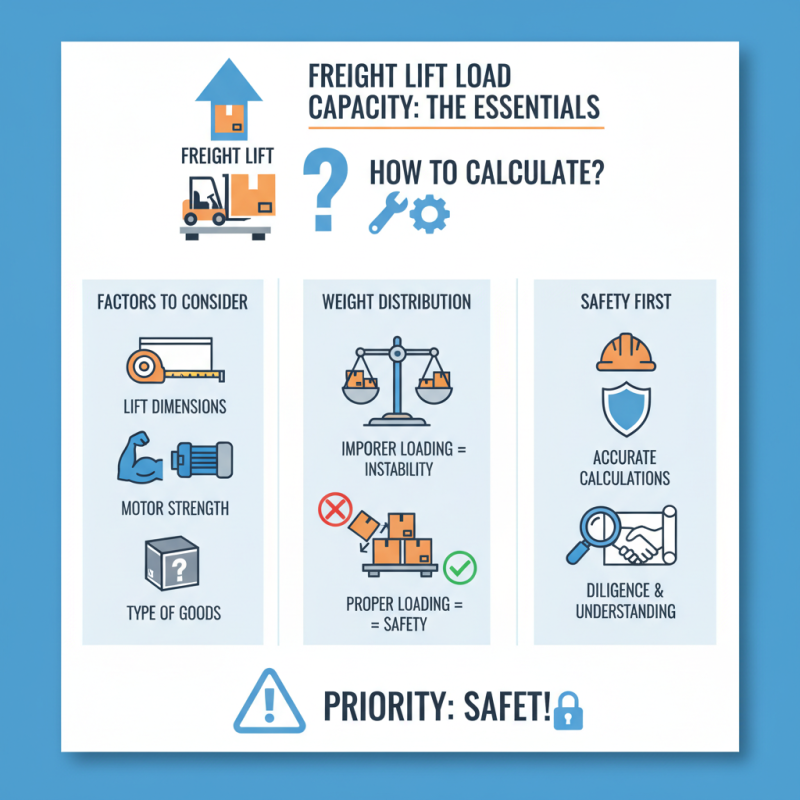
To calculate the load capacity accurately, one must consider various factors. The dimensions of the lift, its motor strength, and the type of goods being transported all play a role. It's not just about the weight; the distribution of that weight matters too. Improper loading can compromise a lift’s stability.

In practice, this calculation can be tricky. Sometimes, even experienced users overlook details. We must recognize that accurate calculations require diligence and a clear understanding of the equipment in use. Ultimately, ensuring safety must be the priority in every freight lifting scenario.
How to Calculate Freight Lift Load Capacity Made Easy?

Understanding Freight Lift Load Capacity Basics

Calculating freight lift load capacity is crucial for safe and efficient operations. Understanding the basics begins with knowing the maximum weight a lift can handle. According to industry standards, most freight lifts typically handle loads ranging from 1,000 to 10,000 pounds. However, this varies based on specific design and material construction. It's essential to refer to the manufacturer's specifications for accurate data.

When assessing load capacity, users should consider dynamic and static loads. A dynamic load is the weight during operation, while a static load refers to the weight at rest. Research from industry reports shows that misjudging either can lead to accidents. Overloading a freight lift by even 10% can significantly increase wear and tear, leading to costly repairs.

In practice, many operators overlook the importance of regular inspections. Compliance with weight limits often gets brushed aside. Ignoring these can create serious safety hazards, not only risking load damage but also putting personnel at risk. Regular training for operators on load capacity and safety measures helps mitigate these risks.

Key Factors Influencing Load Capacity Calculations

When calculating freight lift load capacity, several key factors come into play. Understanding these variables can greatly influence safety and efficiency in operations. For instance, the weight distribution of the load is critical. An uneven load can lead to tipping or excessive strain on the lifting equipment. According to data from the American Society of Mechanical Engineers (ASME), proper load distribution reduces the risk of accidents by up to 25%.

The type of material being lifted is another significant factor. Lighter materials may allow for a higher load capacity, while heavier materials require more robust equipment. A 2019 industry report found that using advanced materials can increase load capacity by nearly 20%. This highlights the importance of selecting the right tools for each unique job.

Additionally, environmental conditions may affect performance. Extreme temperatures, humidity, and other factors can compromise equipment integrity. Regular maintenance checks are essential, as worn components can result in load failures. Experts suggest that 15% of all lift failures occur due to inadequate inspections. This reinforces the need for ongoing evaluations and training among operators.

How to Calculate Freight Lift Load Capacity Made Easy? - Key Factors Influencing Load Capacity Calculations

Load Type Maximum Weight (kg) Dimensions (L x W x H in cm) Material Type Special Considerations
Palletized Goods 1000 120 x 100 x 150 Wood Stackable
Machinery 5000 200 x 150 x 120 Metal Weight distribution
Electronics 700 50 x 40 x 30 Plastic Fragile
Food Products 2500 100 x 80 x 120 Carton Temperature-sensitive
Textiles 1500 150 x 100 x 90 Fabric Bulk packaging

Step-by-Step Guide to Calculate Load Capacity

Calculating freight lift load capacity can seem complicated. However, breaking it down into simple steps makes it manageable. To start, determine the total weight of the items being transported. Next, consider the lift's specifications. Most freight lifts have a maximum load rating, typically outlined in their manuals. For example, many industrial lifts can safely handle between 2,000 to 10,000 pounds.

Tips: Always check the manufacturer's guidelines. If unsure, consult an expert. Misjudging load capacity can lead to dangerous situations.

After establishing weight and capacity, calculate the load distribution. Uneven loads can strain your lift. A balanced load not only increases safety but also enhances the efficiency of lifting mechanisms. Data from industry reports indicate that properly balanced loads can reduce wear and tear on equipment.

Tips: Use load balancers if necessary. They help distribute weight evenly.

Remember, it’s crucial to keep the lift's maintenance in mind. Regular inspections ensure operational safety and longevity. Statistics show that 30% of lift accidents are due to improper maintenance. Reflecting on these aspects can help prevent mishaps. Always prioritize thorough checks before use.

Freight Lift Load Capacity Calculation

This chart demonstrates the estimated load capacities for different types of freight lifts. The data illustrates how the capacity varies based on the type of lift and its design specifications.

Common Mistakes to Avoid When Calculating Capacity

When calculating freight lift load capacity, many overlook key aspects that can lead to mistakes. One common error is ignoring the lift's maximum rated capacity. Always consult the manufacturer's specifications. Neglecting this can result in serious accidents. It's crucial to understand the lift's limitations to ensure safe operations.

Another frequent mistake is failing to account for the weight distribution of the load. Unevenly distributed weights can strain the lift, decreasing its effectiveness. This might lead to mechanical issues over time. Use tools or software to analyze weight distribution properly. Don't depend solely on manual calculations. The implications of a miscalculation can be costly.

Improperly considering the weight of the lifting equipment itself is also an error. Too often, operators only focus on the cargo weight. However, the lift chains, slings, and other gear add weight that impacts overall capacity. Keeping a precise inventory of all components is essential. Reflect on these common oversights to enhance safety and efficiency in freight operations.

Tools and Resources for Accurate Capacity Calculation

Calculating freight lift load capacity can seem daunting. However, utilizing the right tools can simplify the process. Software programs that offer load calculations are widely available. These tools help assess the weight limits of various lifting equipment. They provide detailed insights, ensuring safety and efficiency.

Online resources, such as load capacity calculators, are also effective. Many websites offer free calculators that require users to input specific measurements. This can involve dimensions, weight distribution, and the type of lift. Accurate measurements are crucial for reliable results. Users must understand the limitations of these tools. They often need verification from experienced professionals.

Understanding industry guidelines is equally essential. Many organizations publish load capacity standards. Familiarizing yourself with these documents enhances accuracy. Although tools and resources are available, human experience cannot be overstated. Balancing automation with expertise leads to better decision-making in freight operations. Embracing this combination ensures safe and reliable lifting practices.

FAQS

: What factors influence load capacity calculations for freight lifts?

: Key factors include weight distribution, material type, and environmental conditions. Each affects safety and efficiency.

Why is weight distribution important in freight lift operations?

Uneven weight can cause tipping and strain on equipment. Proper distribution can reduce accident risks by up to 25%.

How does material type affect load capacity?

Lighter materials can increase capacity. Heavier materials require sturdier equipment to ensure safety during lifting.

What environmental conditions can impact lifting performance?

Extreme temperatures and humidity may compromise equipment integrity. Regular maintenance is crucial to prevent failures.

How can I calculate the load capacity of a freight lift?

Start by determining the total weight of items. Then check the lift's maximum load rating specified in its manual.

What is the significance of regular maintenance checks for lifts?

Regular inspections enhance safety and prolong equipment life. Poor maintenance contributes to 30% of lift accidents.

Are there tools available for accurate load capacity calculations?

Yes, software programs and online calculators can assist in calculating load limits. Accurate input is critical for reliable results.

Why is it important to consult industry guidelines for load capacities?

Industry standards provide valuable insights for accurate calculations. Familiarity helps ensure adherence to safety practices.

Conclusion

The article titled "How to Calculate Freight Lift Load Capacity Made Easy" provides a comprehensive guide on how to calculate the load capacity of a freight lift. It begins by explaining the fundamental concepts surrounding freight lift load capacity, highlighting crucial factors that influence the calculations, such as the lift design, materials, and safety standards.

The article then presents a step-by-step guide to calculating load capacity, enabling readers to approach this task with confidence. It also identifies common mistakes that individuals might make during capacity calculations, which can lead to unsafe lifting practices. Finally, it suggests various tools and resources that can assist in achieving accurate capacity calculations, ensuring that operators maintain safety and efficiency in their operations.

Amelia

Amelia

Amelia is a seasoned marketing professional with a wealth of expertise in our company’s core offerings. With an unwavering passion for driving growth and innovation, she plays a pivotal role in shaping our marketing strategies and enhancing brand visibility. A key aspect of her responsibilities......