Warehouse managers often ask, “what is the average lifespan of a warehouse scissor lift?” A useful planning estimate is roughly 10 to 20 years, but it is not a guaranteed service life. Actual lifespan depends on the lift’s design, workload, maintenance history, and operating conditions. A lift used for occasional stock checks may age differently from one raising workers throughout every shift. Heavy loads, uneven floors, dust, and poor battery-charging habits can also shorten component life.
Look beyond the calendar. Check maintenance records, hour-meter readings, battery condition, hydraulic performance, and the smoothness of the platform’s movement. A small hydraulic leak or slower lift speed may signal wear, though neither alone confirms that a machine has reached the end of its useful life. A qualified technician can assess those signs and recommend repairs or replacement based on the specific model. Keep records. They matter.
This guide compares five practical answers to the lifespan question, including typical service-life estimates and the factors that change them. It also explains why a well-maintained lift may remain useful longer, while neglect can make an apparently young machine unreliable. There is no perfect shortcut: even careful owners can miss early wear, and a tidy maintenance log does not prove every part is sound. Use the range as a starting point, then judge the lift by its condition, workload, and inspection findings.
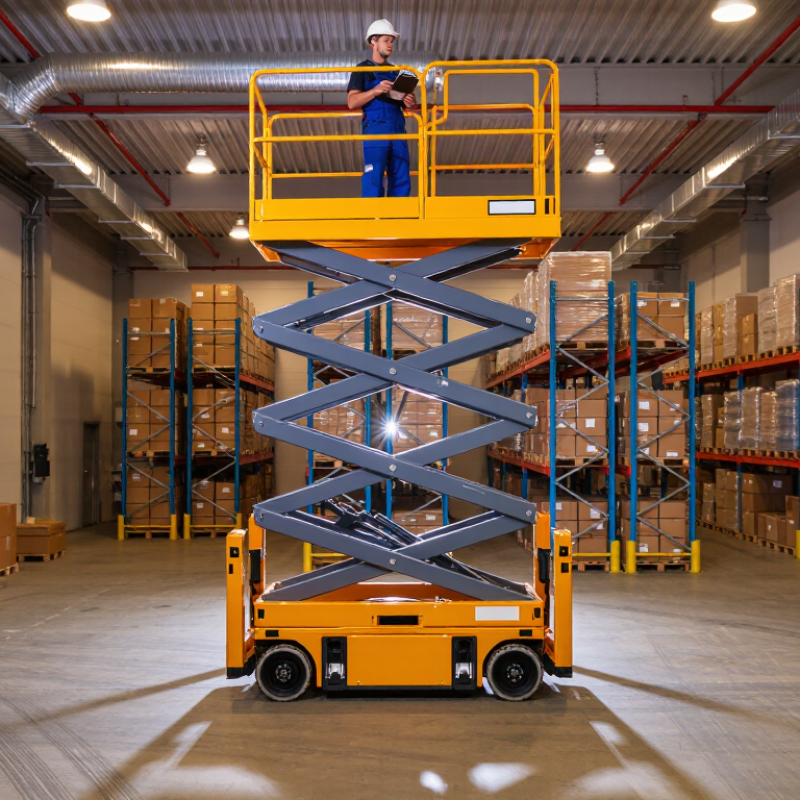
A warehouse scissor lift often serves for about 10–15 years, or roughly 5,000–10,000 operating hours. Treat that as a planning range, not a guaranteed average: public industry data does not establish one lifespan for every lift. A machine working one shift on smooth concrete may age very differently from one running multiple shifts over cracked floors.
Hours matter, but maintenance and working conditions matter more. Dust, impact damage, repeated overloading, and neglected batteries or hydraulics can shorten service life. ANSI/SAIA A92.22-2018 calls for frequent inspections at intervals no longer than three months or 150 operating hours, whichever comes first. OSHA’s aerial-lift rules also require inspection before use each work shift (29 CFR 1910.67). These checks help catch wear early; they do not guarantee a particular lifespan.
Watch the machine, not just its age. Sluggish lifting, recurring leaks, damaged guardrails, or repeated electrical faults may signal that repair costs and downtime are climbing. Keep a simple log of operating hours, repairs, and battery performance. It is easy to miss a pattern. When the platform shakes under load or controls respond inconsistently, stop and arrange a qualified inspection before returning it to service.
A warehouse scissor lift may deliver roughly 2,000 to 5,000 operating hours before major repairs or replacement become worth considering. This is a planning range, not a guarantee. A lift used for short, light tasks on smooth floors may last longer than one that runs near capacity throughout every shift.
Hours matter. So does the work. Frequent lifting at maximum capacity, hard impacts, debris, and poor charging habits can accelerate wear. Batteries, tires, hydraulic components, and electrical controls may need attention at different points, so one hour-meter reading cannot describe the whole machine’s condition. A unit with 3,500 hours and careful maintenance may be a better choice than one with fewer hours and neglected service records.
Check the hour meter alongside maintenance logs, battery performance, and visible wear on the platform and lift structure. Ask how the equipment was operated, not only how long it ran. In practice, hour records can be incomplete, and that uncertainty deserves attention. There is no perfect cutoff; recurring faults, rising repair costs, and unreliable lifting are stronger warning signs than age alone.
A warehouse scissor lift’s lifespan depends on how it is used, maintained, and stored. Calendar age alone tells only part of the story. A lift making frequent trips, carrying heavy loads, or working near its rated capacity may wear faster than one used occasionally. Repeated jolts over uneven floors can strain wheels, joints, and the lifting structure.
Small impacts matter.
Maintenance has a direct effect on wear. Regularly check tires, hydraulic hoses, connections, guards, and emergency controls, following the equipment manual and service schedule. Clean debris from moving parts, and investigate unusual noises or slow lifting rather than waiting for a breakdown. Battery care matters too: poor charging habits or leaving a battery discharged can reduce its useful capacity.
Missed checks happen, even on careful teams.
Warehouse conditions also count. Dust, moisture, temperature swings, and corrosive cleaning chemicals can affect electrical parts and metal surfaces. Store the lift in a dry, protected area when possible, and train operators to use controls smoothly and avoid overloading the platform. Keep service records; they help identify recurring problems and support decisions about repair or replacement.
No single factor predicts lifespan perfectly. A qualified technician can assess wear and safety based on the lift’s actual condition.
Routine care is what helps a warehouse scissor lift remain dependable between shifts. Before each use, check guardrails, gate latches, tires, emergency stops, and platform controls. Look for hydraulic drips beneath the chassis and damaged cables near the lift arms. A slow descent or uneven rise needs attention, not a harder push on the controls. Wipe dust from switches and keep charging contacts clean and dry. Do not improvise.
Follow the service intervals in the operator’s manual, and have qualified technicians inspect structural parts, pins, hoses, and batteries. Record dates, faults, and repairs; a simple log can reveal recurring leaks or battery decline.
Those reports cover several equipment types and do not prove that maintenance caused or prevented incidents, but they underline the value of careful checks. No checklist catches everything. A neglected grease point or a small leak may be easy to miss, so recheck after repairs and note what still feels unusual.
A warehouse scissor lift should be repaired when a fault is isolated, safely correctable, and the frame remains sound. Start with the service log, not a guess about age. Repeated hydraulic leaks, slow platform movement, or uneven lifting may point to worn seals, low fluid, or a developing mechanical problem. Look closely. Check the guardrails, welds, tires, controls, emergency stop, and charging connections. A small fluid mark beneath the lift can be an early warning, not just a housekeeping issue.
Replacement deserves serious consideration when repairs keep returning, parts are difficult to source, or inspection finds structural damage. Cracks near a scissor arm pivot or a bent platform support are especially concerning. So is a lift that cannot hold its rated load consistently. A qualified technician should assess defects before the equipment returns to service. Don’t rely on a quick test alone. It can miss problems that appear only under load.
Compare the repair estimate with the cost of downtime, future maintenance, and the lift’s remaining useful life. A machine with frequent faults can disrupt picking work and create pressure to take shortcuts. That matters. Still, replacement is not automatically the safer choice; a well-maintained older lift may remain serviceable. Keep inspection findings, repair dates, and operating hours together. The decision can be imperfect, especially when records are incomplete, so document what is known and what still needs checking.
Planning estimate: A warehouse scissor lift may serve for around 10–15 years, but there is no fixed lifespan. Usage, maintenance, operating conditions, and the lift’s current condition all matter.
Repair or replace? Repair when a fault is isolated and the lift can be returned to safe operation. Consider replacement when structural damage, repeated major failures, unavailable parts, or escalating repair costs make continued service unsafe or uneconomical. Follow the manufacturer’s inspection and maintenance guidance.
Roughly 2,000 to 5,000 hours is a planning range before major repairs or replacement may be worth considering. Not a guarantee. Light use on smooth floors may extend its service life.
No. A 3,500-hour lift with careful maintenance records may be a better choice than a lower-hour unit with neglected service. Hours are only clues. Check the logs, battery, and visible wear.
Frequent heavy loads, near-capacity work, hard impacts, debris, and rough floors can accelerate wear. Small impacts add up. Tires, joints, and the lifting structure may suffer.
Check guardrails, gate latches, tires, emergency stops, and platform controls. Look for hydraulic drips and damaged cables near the lift arms. Slow or uneven lifting needs attention.
Poor charging habits or leaving a battery discharged can reduce its useful capacity. Keep charging contacts clean and dry, and follow the manual’s guidance. I’d be cautious about guessing.
Follow the service intervals in the operator’s manual. Qualified technicians should inspect structural parts, pins, hoses, and batteries. Recheck after repairs; a small leak can be easy to miss.
Yes. Dust, moisture, temperature swings, and corrosive cleaning chemicals can affect electrical parts and metal surfaces. Store the lift in a dry, protected area when possible.
Recurring faults, rising repair costs, or unreliable lifting are stronger warning signs than age alone. Keep dated notes on faults and repairs. Logs help, but they can be incomplete.
Understanding what is the average lifespan of a warehouse scissor lift starts with recognizing that there is no single service-life figure for every machine. The lift’s age, operating hours, workload, environment, and maintenance history all influence how long it can work reliably. Operating hours can offer a useful comparison, but frequent heavy use or harsh conditions may wear components faster than occasional, careful operation.
Routine inspections and timely servicing can help extend a lift’s useful life by identifying wear, leaks, electrical issues, or damaged parts before they become more serious. Keep service records, follow the equipment’s maintenance schedule, and address problems promptly. When deciding whether to repair or replace a lift, consider its safety, reliability, repair frequency and cost, and whether it still meets warehouse needs. A well-maintained lift may remain useful for years, while recurring faults or costly repairs can make replacement the more practical choice.

Kleen Lift