Hydraulic cylinders power excavators, presses, lifts, and countless industrial machines. When one fails, production may stop suddenly, creating safety risks and expensive repair delays. A bent rod, leaking seal, or sluggish movement often signals a deeper system problem. The visible damage is not always the original cause.
If you have searched for “what are the common causes of hydraulic cylinder failure,” you may expect one simple answer. In practice, failure usually develops through several connected issues. Contaminated oil can scratch polished surfaces. Excessive side loading can bend the rod. Poor alignment can increase wear at every stroke. Incorrect pressure settings may overload seals, pistons, and cylinder walls.
Small leaks matter.
These seven practical tips examine common failure patterns from a maintenance and engineering perspective. They focus on inspection details that technicians can verify, including oil condition, mounting alignment, rod damage, seal wear, pressure control, and lubrication. A clean rag around the rod can reveal fresh fluid before a leak becomes obvious. Uneven wear marks may expose a mounting problem that a quick visual check misses.
Reliable diagnosis requires more than replacing seals and restarting the machine. That approach sometimes works, but it can hide the real fault. Manufacturer service manuals, pressure readings, maintenance records, and trained inspection should guide decisions. Conditions vary between applications, so a repair method suitable for a small lift may fail on a high-load press. Careful observation remains essential, even when the cause seems obvious.
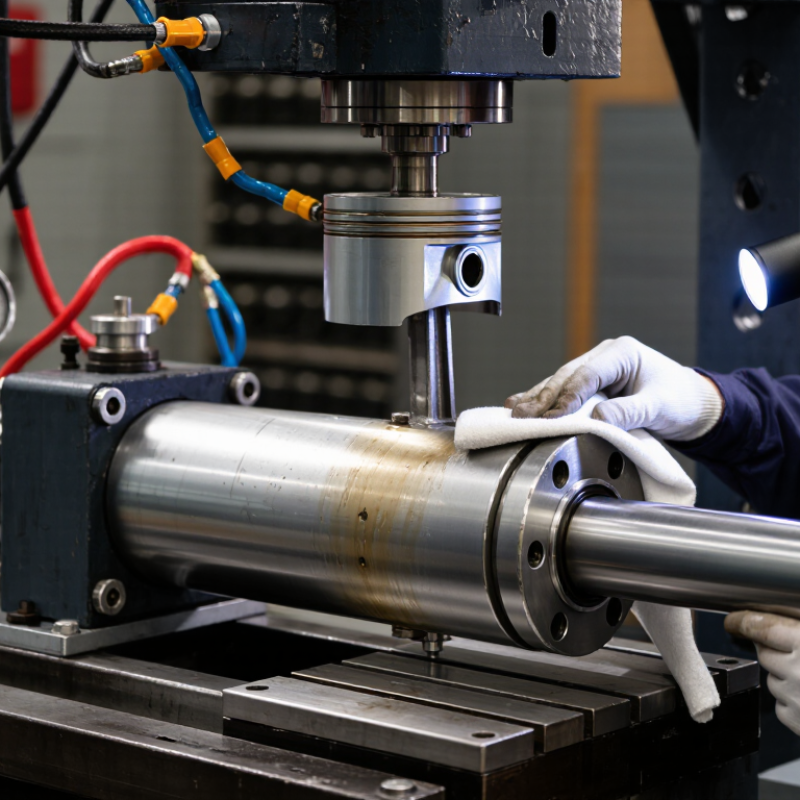
Hydraulic cylinder failure usually begins with small changes: slower movement, uneven travel, or oil on the rod. Noria’s widely cited maintenance guidance attributes roughly 70% of hydraulic failures to contamination. Dirt scratches seals and damages polished surfaces. Water also promotes rust and reduces lubricant performance. Contamination is often invisible. ISO 4406:2017 recommends cleanliness coding, so technicians should test oil instead of judging it by appearance.
Mechanical stress creates another common problem. Side loading, poor alignment, and loose mounting bolts bend rods or wear bushings unevenly. Excess pressure can deform seals and damage the piston. A cylinder may still operate while these defects grow. That assumption fails. Field inspections should check rod straightness, pin wear, mounting alignment, and actual relief-valve settings. Small leaks matter.
Heat and cavitation deserve closer attention. The U.S. Department of Energy’s hydraulic-efficiency guidance notes that fluid losses can become waste heat, raising operating temperature and accelerating seal failure. A hot reservoir, darkened oil, or hardened seal often signals this cycle. Cavitation may sound like gravel inside the pump and can cause unstable cylinder motion. Technicians sometimes replace the seal and return the machine to service. The repair may last only days. A better diagnosis reviews filtration, oil viscosity, load changes, and maintenance records before installing new parts. Mistakes happen when symptoms are treated as causes.
Dust, water, and metal particles increase friction inside the cylinder. They can score the rod and cut seals. Even clear-looking oil may contain harmful particles. Small particles matter.
Slow movement, jerky travel, unusual noise, heat, and sudden leakage are common warnings. Look for scratches, rust, or an oil film on the rod. A fluid sample can reveal particles that eyesight misses. Visual checks are not enough.
Check the rod surface before demanding work begins. Fine scratches can damage the rod seal and create an oil trail. Inspect the wiper seal for tears or hardened edges. A damaged wiper lets grit enter during every stroke.
A blocked filter can raise pressure and restrict oil flow. This may starve moving components and imitate cylinder failure. Inspect the filter before blaming the cylinder. It is an easy step to miss.
Water reduces lubrication and encourages rust inside the cylinder. It can pit polished surfaces and accelerate seal wear. Keep fluid containers sealed during storage and refilling. Water hides quietly.
Broken metal may remain inside hoses, valves, and the reservoir. Replacing one seal does not remove those particles. Flush the system after failure, not only after repair. Otherwise, the replacement may fail quickly.
Misalignment forces the rod to carry side loads. The rod may polish unevenly, while seals develop crescent-shaped wear. Check mounting pins, brackets, bushings, and pivot movement. Measure before applying pressure.
A cylinder may lift a load yet fail during startup or impact. Review peak force, uneven geometry, and the complete load path. Do not judge capacity from one smooth cycle. The original problem may remain.
Record fluid condition, filter changes, pressure readings, temperatures, leaks, and repair dates. Photograph rod scoring before replacing damaged parts. These details often reveal alignment or contamination problems. Memory misses patterns.
Hydraulic cylinder failure can result from several interconnected problems, including contamination, misalignment, excessive loads, worn seals, and unsuitable hydraulic fluid. Dirt, water, or metal particles can scratch internal surfaces, clog passages, and accelerate wear on pistons, rods, and valves. Misalignment and loads beyond the cylinder’s rated capacity create side forces that may bend the rod, damage bearings, or deform other components. Over time, seal deterioration, heat, pressure fluctuations, and incorrect fluid levels or viscosity can also cause leaks and reduce operating efficiency.
Understanding what are the common causes of hydraulic cylinder failure helps users identify risks before serious damage occurs. Regular maintenance is essential and should include inspecting seals and rods, checking fluid cleanliness and levels, tightening connections, monitoring operating pressure, and confirming proper alignment. Replacing worn parts promptly and keeping accurate service records can extend cylinder life, improve safety, and prevent unexpected downtime.

 Kleen Lift